PRE-RELEASE. This repository contains integration source, not a verified marketplace or hosted customer journey. Do not rely on it for production delivery.
CLOUD API URL REQUIRED. There is no working hosted default or supported production self-host quick start. Use cloud-dependent source only with a deployment you operate and have independently verified.
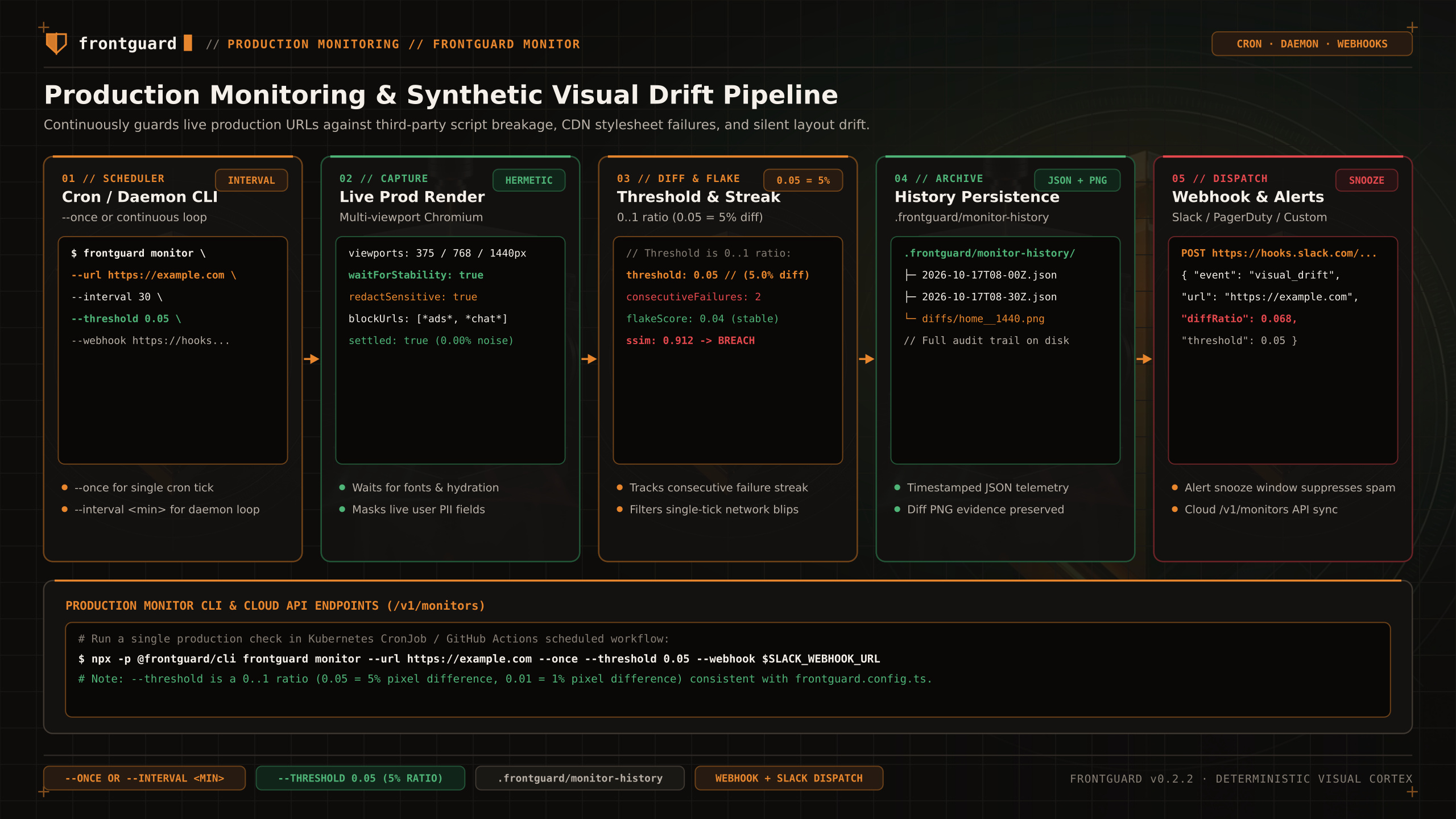
Forward monitor alerts to a Slack Incoming Webhook through an adapter that translates the Frontguard JSON payload into a Slack message.
The checked-in Slack worker and OAuth source are for evaluation. No installed public app, durable alert delivery, or support commitment is claimed.
Using Slack webhooks with frontguard monitor
Monitor sends { tool, timestamp, alerts, summary }. Slack expects text or blocks, so do not pass SLACK_WEBHOOK_URL directly to --webhook. Run this local adapter with Node 22:
slack-adapter.mjs
import { createServer } from 'node:http'

if (!process.env.SLACK_WEBHOOK_URL) throw new Error('Set SLACK_WEBHOOK_URL')

createServer(async (req, res) => {
  if (req.method !== 'POST' || req.url !== '/alerts') {
    res.writeHead(404).end()
    return
  }
  try {
    let body = ''
    for await (const chunk of req) {
      body += chunk
      if (Buffer.byteLength(body) > 65536) {
        res.writeHead(413).end('Alert too large')
        return
      }
    }
    const { summary } = JSON.parse(body)
    const response = await fetch(process.env.SLACK_WEBHOOK_URL, {
      method: 'POST',
      headers: { 'content-type': 'application/json' },
      body: JSON.stringify({
        text: 'Frontguard: ' + summary.alerted + ' of ' + summary.total + ' checks alerted',
      }),
      signal: AbortSignal.timeout(10000),
    })
    res.writeHead(response.ok ? 200 : 502).end()
  } catch {
    res.writeHead(502).end('Alert forwarding failed')
  }
}).listen(8788, '127.0.0.1')
This example listens only on localhost. Use your existing authenticated alert service for remote CI runners; webhook delivery is best-effort.
Cloud requirement
Interactive Slack buttons and OAuth installation in integrations/slack-app require a self-operated Cloud API deployment and are not generally available.